Summer 2026 Programs Now Open! Limited spots — limited spaces available!Explore programs →

    Program Type

    Volunteer Teaching Programs — Abroad, Online & Local

    Volunteer teaching means giving unpaid teaching or tutoring support — normally alongside a qualified teacher — in a school or community program abroad, in an online conversation or tutoring program, or in your own community. It is not a substitute for qualified classroom staff, and it is never unsupervised contact with children. This guide covers all three routes, what programs commonly require, background checks, costs and how to choose an ethical placement.

    Is Teaching volunteering right for you?

    Decision-support summary. Editorial guidance, not a recommendation — always verify with the specific program.

    Best suited for

    • Native or near-native English speakers willing to do real lesson prep
    • Volunteers with prior teaching, tutoring, or coaching experience
    • Volunteers willing to commit 4+ weeks (shorter placements rarely benefit students)
    • Teachers, education students, or career-changers exploring the field

    Avoid if

    • You want a 1-2 week trip with no curriculum responsibility
    • You don't speak the local language and the program lacks a co-teacher arrangement
    • You're seeking 'play with the children' time rather than structured teaching
    • You're not willing to do real lesson planning and feedback

    Skills needed

    • Working English fluency (mandatory)
    • Patience and classroom-management ability
    • Lesson-planning skills (or willingness to learn fast)
    • Cultural-awareness training before arrival

    Minimum ethical duration

    4 weeks for short-term teaching support; 8+ weeks for any sole-lead classroom role

    What volunteers do

    • Co-teach or assist a qualified local teacher
    • Run structured English conversation / literacy sessions
    • Develop teaching materials a local teacher can reuse
    • 1:1 tutoring for students who need extra support
    • Teacher-training and curriculum support (higher-leverage)

    What volunteers should NOT do

    • Replace a qualified local teacher
    • Lead a classroom alone without local-staff supervision
    • Provide unsupervised contact with children
    • Teach subjects you're not qualified in

    Teaching-specific red flags

    • Volunteer is the sole classroom presence (no local teacher)
    • No background check requirement for child-facing work
    • Programs at residential children's homes or orphanages
    • 'No experience necessary' for child-facing roles

    Ethical alternatives worth considering

    • Teacher-training programs where you upskill local teachers (capacity stays after you leave)
    • Curriculum / materials development for local schools
    • Adult English conversation programs (no child-safeguarding concerns)
    • Online English tutoring for the same students remotely (see virtual volunteering guide)

    Questions to ask any Teaching provider in writing

    1. Who is the qualified local teacher I'll co-teach with?
    2. What's the curriculum, and how was it designed?
    3. What's your written child-safeguarding policy?
    4. What's the background-check requirement?
    5. How is the placement structured to leave capacity behind?

    Plus the universal due-diligence list at /verify-volunteer-program.

    What volunteer teaching is — and why the need is real

    Schools in many countries face genuine shortages of qualified teachers. UNESCO's Global Report on Teachers (22 February 2024, retrieved 2026-09-29) found that the world needs 44 million more primary and secondary teachers by 2030, with sub-Saharan Africa the worst affected at an estimated 15 million of that total. Volunteer teachers can support qualified local staff in that gap — they are not a replacement for them.

    Teaching abroad, online or locally also asks something of the volunteer: patience, cultural sensitivity, real lesson preparation, and the willingness to take direction from the local or program staff you are supporting rather than run a classroom solo.

    Many placement organisations advertise that no experience or qualification is needed. Treat that claim carefully: this site's own guidance (in the panel above) flags “no experience necessary” for a child-facing role as a red flag, not a convenience. The lower-risk entry points are co-teaching beside a qualified local teacher, adult conversation classes, and online conversation practice — see our framework for evaluating a teaching-abroad program before you commit to a placement.

    Three ways to volunteer as a teacher

    Volunteer teaching isn't only a trip abroad — the same skills apply online and in your own community.

    Abroad

    Placements typically involve co-teaching alongside a qualified local teacher, running English conversation sessions, preparing materials, or teacher training — usually in a primary or secondary school, community center, or monastery school.

    See all destinations or the destination cards below for country-specific detail.

    Online

    ENGin (retrieved 2026-09-29) — Weekly English-conversation practice with Ukrainian students. One hour a week for at least 10-12 weeks, age 13+, non-native English speakers welcome, no teaching experience required.

    Paper Airplanes (retrieved 2026-09-29) — Online tutoring for conflict-affected young adults using a guided curriculum. Age 18+, one to two hours a week, plus a multi-hour training module covering conduct and safeguarding.

    Learn To Be (retrieved 2026-09-29) — 60-minute tutoring sessions one to two times a week for at least four months. Tutors must be at least high-school age; no prior experience required.

    This site has no relationship with any of these organisations — verify current requirements on their own sites before applying.

    In your own community

    UK

    Bookmark Reading (retrieved 2026-09-29) — Reading support for 5-9 year-olds. Two 30-minute sessions a week for six-week programmes, 18+, DBS check, references and safeguarding training required.

    Action Tutoring (retrieved 2026-09-29) — Curriculum subject tutoring, one hour a week for 10-20 weeks. Open only to residents of England, Scotland or Wales because of DBS requirements; degree-level or equivalent subject knowledge expected.

    Schoolreaders (retrieved 2026-09-29) — A minimum one-school-year, term-time commitment reading with pupils. Requires an enhanced DBS check and safeguarding training.

    US

    Reading Partners (retrieved 2026-09-29) — Literacy tutoring, a little over an hour a week including a 45-minute session. Age 14+ (18+ for some roles), background check and orientation required.

    ProLiteracy (retrieved 2026-09-29) — Adult literacy tutoring, one to two sessions a week of 1.5-2 hours; programs ask for at least a six-month commitment. High-school diploma or equivalent; no prior experience required, training provided.
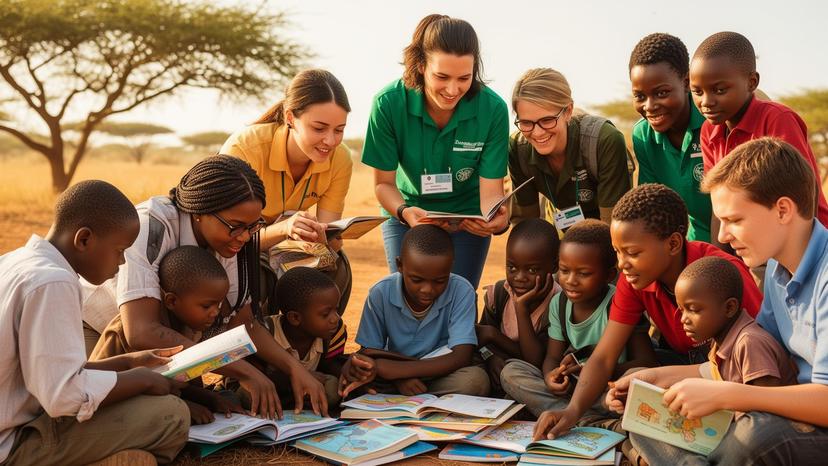
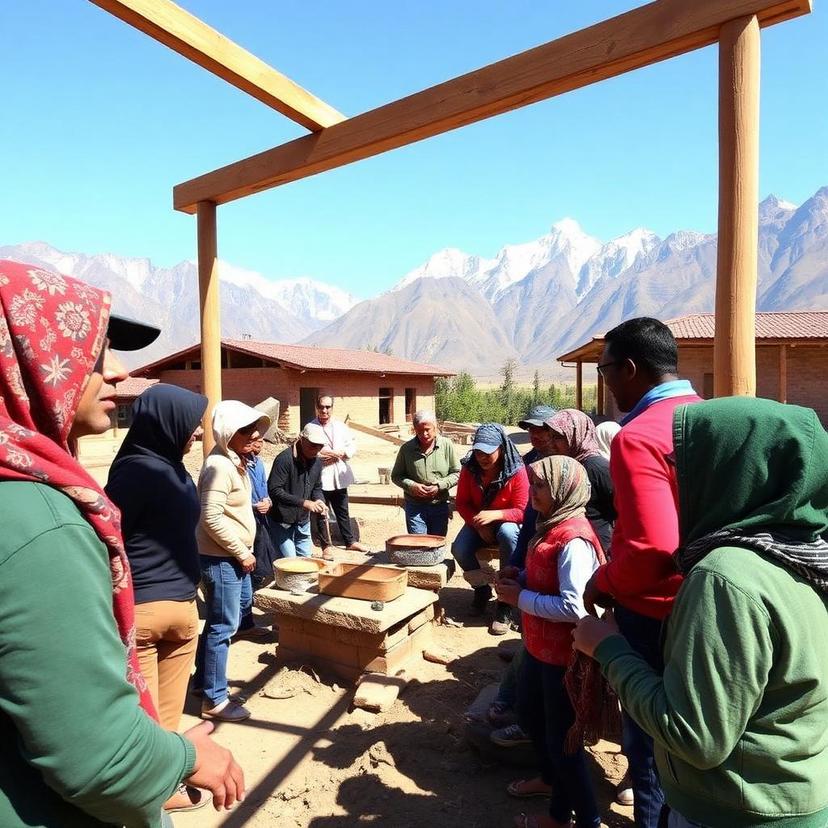
    What You'll Do

    Teaching programs offer a variety of roles and responsibilities, tailored to your skills and the community's needs.

    Classroom Teaching

    Lead classes in English, math, science, or other subjects. You'll plan lessons, create activities, and adapt teaching methods to local learning styles and resource availability.

    Language Tutoring

    Work one-on-one or in small groups to improve students' English conversation skills, pronunciation, and confidence through interactive exercises and games.

    Curriculum Development

    Help create teaching materials, lesson plans, and educational resources that local teachers can continue using after your placement ends.

    After-School Programs

    Run extracurricular activities including art, music, sports, drama, and computer skills that broaden students' horizons beyond the standard curriculum.

    Teacher Training

    Share modern teaching methodologies with local educators through workshops and collaborative planning sessions, multiplying your impact long after you leave.

    Community Engagement

    Organize community events, parent meetings, and educational awareness campaigns to strengthen the connection between schools and families.

    Top Destinations for Teaching Programs

    Destinations commonly available for teaching volunteering around the world.

    Southeast Asia

    Cambodia

    Placements are found in both urban Phnom Penh and rural communities, in primary and secondary school classrooms.

    Fees vary by organisation
    South Asia

    Nepal

    Placements are found in Himalayan village schools and monastery schools, sometimes combined with community development work.

    Sister-site teaching placements from $148/week (sourced 2026-06-14)
    West Africa

    Ghana

    Placements support supplementary teaching in public schools, covering English, maths, science and sports.

    Fees vary by organisation
    Southeast Asia

    Vietnam

    Placements range from urban language centers to village schools in the northern highlands.

    Fees vary by organisation
    Central America

    Guatemala

    Placements are found in indigenous Mayan communities around Lake Atitlan and Antigua, sometimes combined with Spanish-language immersion.

    Fees vary by organisation
    East Africa

    Kenya

    Placements support primary school teaching, tutoring and after-school programs in Maasai communities and Nairobi's informal settlements.

    Sister-site teaching placements from $225/week (sourced 2026-06-14)

    Requirements & Skills

    What programs commonly ask for — none of this is universal, so always confirm with the specific program.

    What programs commonly ask for

    • Fluent, working English
    • Often a high-school diploma or equivalent (ProLiteracy, for example, asks for one)
    • A criminal-record check for any role in contact with children

    Skilled or professional routes such as VSO (retrieved 2026-09-29) ask for more: at least three years' experience and a degree or equivalent qualification. Online conversation-practice programs (see above) often ask for none.

    Qualifications (optional, sourced)

    • CELTA (retrieved 2026-09-29) — Cambridge's own course page states CELTA is 120 hours, including 6 hours of tutor-supervised, assessed teaching practice per candidate.
    • Trinity CertTESOL (retrieved 2026-09-29) — Trinity's own pages state a minimum of 130 guided learning hours over a minimum of four weeks full-time, designed for people with little or no prior teaching experience. Minimum age 18.
    • British Council TeachingEnglish (retrieved 2026-09-29) — Free — the British Council's own site offers over 400 full lesson plans and free self-access online training for anyone preparing to teach English.

    Background checks

    UK — a basic DBS check (gov.uk, updated 28 April 2026, retrieved 2026-09-29) costs £21.50 including volunteer applications, is available in England and Wales, and shows only unspent convictions and cautions. UK nationals/residents volunteering overseas with children can also be asked for ACRO's International Child Protection Certificate (retrieved 2026-09-29), which exists specifically for that purpose, including teaching roles — we could not verify its cost or processing time, so none is given here.

    US — programs commonly ask for a state or federal criminal-record check. We could not verify a fee for this directly, so none is stated.

    Typical Duration & Cost

    Teaching programs range from short introductions to full academic year placements. Ask what a fee covers — accommodation, meals and in-country support are commonly included, but not always.

    2-4 Weeks

    A short-term introduction to teaching abroad. Best for gap year students or those testing the waters. You'll make connections and contribute to ongoing programs.

    First-time volunteers, gap year students

    1-3 Months

    The sweet spot for teaching programs. Enough time to build relationships with students, see academic progress, and develop your own teaching skills significantly.

    Most volunteers, career changers, TEFL students

    3-6 Months

    Extended placements allow you to cover a full academic term, implement curriculum changes, and become a valued member of the school community.

    Serious educators, those considering teaching careers

    6-12 Months

    Full academic year placements provide the deepest impact. You'll see students transform, build lasting relationships, and gain significant professional experience.

    Career educators, those seeking transformative experiences

    Among the destinations our sister site, VolunteerToTheWorld.com, covers for teaching, its cheapest weekly rate we can source is $148/week (Nepal) and its highest is $700/week (Sri Lanka), sourced 2026-06-14.

    Government-backed and long-term routes work differently — the Australian Volunteers Program, for example, covers flights, accommodation and living allowances rather than charging a fee. See the next section for what we could verify.

    For destination-by-destination detail, see our pricing guide and cost breakdowns.

    Government-backed and long-term teaching routes

    VSO (retrieved 2026-09-29)

    Recruits experienced professionals for named education roles (Early Years and Primary teachers, STEM experts, teacher educators, inclusive-education specialists): at least three years' experience, a degree or equivalent qualification, and a criminal-record check. Typically 9-24 months, sometimes 3-8; no upper age limit.

    Australian Volunteers Program (retrieved 2026-09-29)

    Places volunteers in teacher-training and curriculum-development roles for 4-12 month assignments. Accommodation and living allowances, flights and insurance are covered.

    European Solidarity Corps (retrieved 2026-09-29)

    You can register from age 17; activities run from age 18-30 (35 for Humanitarian Aid Volunteering). Projects run from two weeks up to a year, capped at 12 months of total volunteering time for projects funded from 2024 onward.

    Peace Corps and UN Volunteers also run education-related volunteer routes; their own sites could not be fetched for this guide, so we link them without further claims: see Peace Corps and UN Volunteers.

    A Day in the Life of a Teaching Volunteer

    6:30 AM

    Wake up and breakfast at your host family or volunteer house

    7:30 AM

    Walk to school — greet students and staff along the way

    8:00 AM

    Morning assembly followed by your first teaching session

    10:00 AM

    Tea break with local teachers — a chance to share ideas and plan

    10:30 AM

    Second teaching session — perhaps small group English conversation

    12:30 PM

    Lunch break — eat with students or staff

    1:30 PM

    Afternoon sessions or after-school activities (sports, art, games)

    3:30 PM

    Lesson planning and material preparation for tomorrow

    5:00 PM

    Free time — explore the local area, journal, or socialize with other volunteers

    7:00 PM

    Dinner with your host family or volunteer group

    How to choose an ethical teaching placement

    The decision panel near the top of this page lists the questions to put to a program before you commit. Three tests sit underneath all of them: whether a qualified local teacher stays in charge of the class, whether the program can show you its safeguarding rules in writing before you pay, and whether anything you build — materials, a training session, a reading routine — will still be in use after you have gone.

    Walk away from any program that places volunteers in a residential children's home or orphanage — this site does not promote orphanage volunteering — and from any placement where you would be the only adult in the room, or where nobody asks for a background check before child-facing work.

    The evidence for avoiding orphanage volunteering is direct. UNICEF Nepal (retrieved 2026-09-29) warns that orphanage volunteering carries real safeguarding risk: up to 85% of children in Nepal's orphanages have at least one living parent, and short-term volunteering by unqualified people can add to a child's sense of abandonment. UNICEF urges people who are not qualified professionals to reconsider volunteering directly with children. Comhlámh (retrieved 2026-09-29), the Irish association of development workers and volunteers, states it is “firmly opposed to orphanage volunteering” — guidance this site follows: avoid it entirely.

    Read our child safeguarding policy, our framework for evaluating a teaching-abroad program, and our guide to orphanage volunteering ethics before you commit.

    Volunteer Teaching FAQ

    Do I need a TEFL or CELTA to volunteer teach?
    No — most volunteer teaching roles do not require a qualification. Trinity's CertTESOL is designed for people with little or no teaching experience, and the British Council's TeachingEnglish site offers free lesson plans and free self-access training for anyone preparing to teach. A qualification such as CELTA (120 hours, including 6 hours of tutor-supervised teaching practice) matters more for sole-charge or paid roles than for co-teaching alongside a qualified local teacher.
    Do I need a background check?
    For any role in contact with children, yes. In the UK, a basic DBS check (£21.50, covering unspent convictions and cautions) is the standard requirement, and UK nationals volunteering overseas with children can also be asked for ACRO's International Child Protection Certificate, which exists specifically for that purpose, including teaching roles. In the US, programs commonly ask for a state or federal criminal-record check. Treat 'no background check required' for a child-facing role as a red flag, not a convenience.
    Can I volunteer to teach online?
    Yes. ENGin matches volunteers 13+ for weekly English-conversation practice with Ukrainian students (no teaching experience required); Paper Airplanes trains volunteers 18+ to tutor conflict-affected young adults 1-2 hours a week after safeguarding training; and Learn To Be has high-school-age-or-older tutors commit to 60-minute lessons once or twice a week for at least four months. None of these are affiliated with this site — check what each expects before you sign up.
    How long do volunteer teaching placements last?
    It depends on the route. Short-term placements abroad run from a few weeks; government-backed programs run much longer — VSO typically places education volunteers for 9-24 months (sometimes 3-8), and the Australian Volunteers Program runs 4-12 month teacher-training assignments. Local tutoring commitments are lighter but steadier: UK reading charities ask for six-week to full-year programmes of one to two sessions a week, and US literacy programs typically ask for at least six months.
    Is it ethical to volunteer in an orphanage school?
    Major child-welfare bodies say no. UNICEF Nepal reports that up to 85% of children in Nepal's orphanages have at least one living parent, and warns that short-term, unqualified volunteering can add to a child's sense of abandonment — it urges people who are not qualified professionals to reconsider volunteering directly with children. Comhlámh, the Irish development-worker association, states it is 'firmly opposed to orphanage volunteering.' This site does not list orphanage placements; see our child safeguarding policy.
    What does volunteer teaching cost?
    It varies by route and organisation, so ask what a quoted fee actually covers. Government-backed programs work differently: the Australian Volunteers Program, for example, states that it covers flights and insurance and pays accommodation and living allowances for accepted volunteers; VSO's own FAQ does not state what it covers financially, so we don't state it here. Local tutoring through a charity is typically unpaid with no placement fee. For paid teaching placements abroad, fees vary by organisation and destination — see our cost guide for the specific sister-site figures we can source.

    Read more: teaching English abroad without a TEFL, teaching English in Southeast Asia, teaching English in East Africa, and the country teaching guides for Vietnam, Ghana and Guatemala.

    Ready to Make a Difference Through Teaching?

    Browse teaching programs on Volunteer to the World and find your perfect placement. Your classroom adventure awaits.

    Stay in the Loop

    Get volunteer tips, destination guides, and opportunities delivered to your inbox.

    Weekly updates. No spam. Unsubscribe anytime.