
The question "Is volunteering abroad worth it?" gets asked thousands of times a month on Google. And honestly, it deserves a more nuanced answer than most articles provide. The truth is that volunteering abroad can be one of the most transformative experiences of your life — or it can be an expensive guilt trip that helps nobody. The difference lies in preparation, program selection, and honest self-assessment.
This article gives you the honest cost-benefit analysis that most volunteer organizations will not, because they are trying to sell you a placement.
The Real Financial Costs
Let us start with the number that matters most to many people: money. The average cost of a two-week volunteer abroad program in 2026 breaks down roughly like this:
Total for a two-week trip: $1,350 to $6,500
For a month-long program, expect $2,000 to $8,000 all in. For three months, $4,000 to $15,000. These are real numbers that should not be glossed over. A budget volunteer trip to Southeast Asia costs far less than a structured program in the Galapagos, but both require a meaningful financial commitment.
The critical question is not just "Can I afford this?" but "What else could this money do?" If you donated $5,000 directly to a well-run organization in your target country, that money could fund a local teacher's salary for a year, provide clean water to an entire village, or send several children to school for a full academic year.
The Career Value — Real Data
Here is where the picture gets more positive — though the published evidence is thinner than the confident numbers you will see quoted around the internet. The one well-documented survey we can point you at is Deloitte's:
We have removed several other statistics that used to appear in this section — figures attributed to graduate-recruitment and international-education bodies about job offers and starting-salary premiums — because we could not trace any of them to a published report. If you see those numbers quoted elsewhere, ask for the source before you rely on them.
The career value is highest when your volunteer work aligns with your professional goals. A nursing student doing clinical placements in rural Tanzania gains far more career-relevant experience than the same student doing general classroom teaching.
Recommended Reading
Personal Growth ROI
This is harder to quantify but arguably the most valuable return on investment, and it is where the honest answer is "returned volunteers consistently describe the same handful of changes" rather than "a study proves it." These are the outcomes volunteers report to us and to the organisations that place them:
Increased adaptability and resilience. This is the change volunteers report most often. Living without reliable electricity, navigating foreign bureaucracies, and communicating across language barriers builds a kind of resilience that comfortable lives rarely develop.
Enhanced empathy and cultural competence. Immersion in a different culture, especially one with fewer resources, fundamentally shifts your perspective. This is not the same as reading about poverty — it is living alongside it, sharing meals with people who experience it, and understanding the complexity of systemic inequality.
Greater clarity about values and purpose. Many returned volunteers describe the experience as a "reset" that helped them understand what truly matters to them. Career changes, relationship decisions, and lifestyle shifts frequently follow volunteer placements.
Improved communication skills. Working with people who speak different languages and come from different cultural contexts forces you to become a better communicator. You learn to listen more carefully, explain more clearly, and read nonverbal cues with greater sensitivity.
Measuring Your Actual Impact
Here is the uncomfortable truth: short-term volunteers often have minimal direct impact on the communities they serve. We are not aware of a published study that puts a clean number on this, and we have removed one we used to cite here because we could not trace it. But the reasoning is not controversial: a placement of a week or two is mostly spent arriving, being oriented, and leaving, and the organisations that are candid about impact say so themselves. Treat any provider that promises you measurable community-level change in under two weeks as a red flag.
However, impact can be measured in several ways:
When Volunteering Abroad Is NOT Worth It
It would be dishonest not to address the scenarios where volunteering abroad is actively harmful or simply not worth the investment:
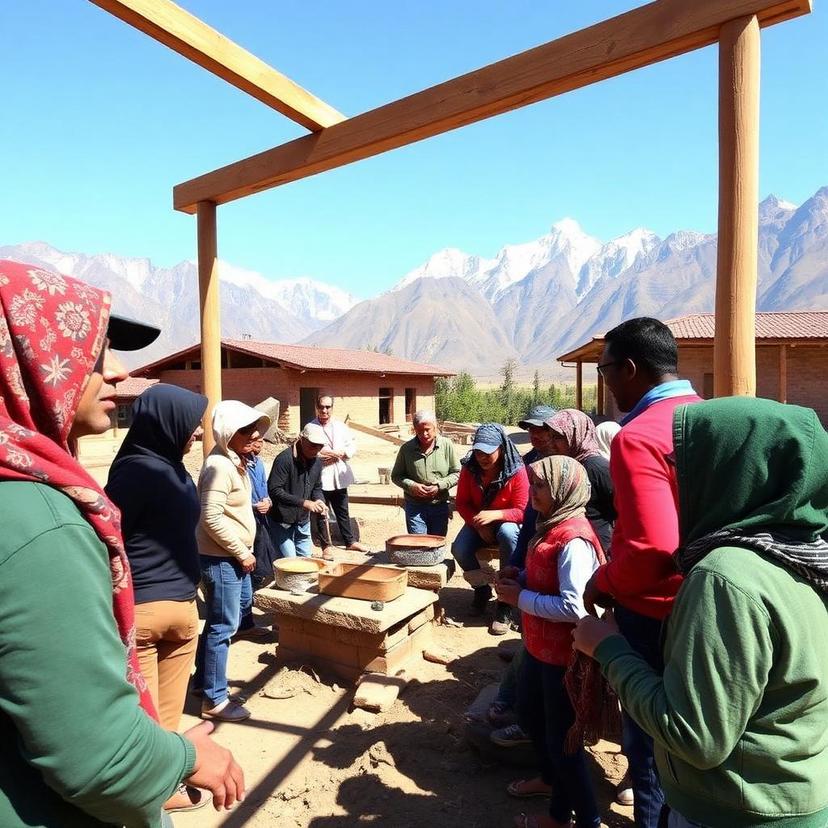
When the program displaces local workers. If the job you are doing could be done by a local person who needs the employment, your presence is harmful regardless of your intentions. This is particularly common in construction projects and orphanage care.
When you are going primarily for Instagram content. Voluntourism motivated by social media clout tends to center the volunteer rather than the community. If your primary motivation is photos and personal branding, consider whether that $3,000 would be better donated.
When you lack relevant skills and the program is short. A one-week general volunteer placement where you paint a wall or play with children may make you feel good, but the community impact is negligible. Short-term placements are only worthwhile when you bring specific, needed skills.
When you cannot afford it without going into debt. Taking on credit card debt or student loans to volunteer abroad is rarely a wise financial decision. There are free and low-cost alternatives, including domestic volunteering, remote volunteering, and funded programs.
When the organization is not transparent. If you cannot get clear answers about where your money goes, who benefits, and what the community has asked for, walk away.
Alternatives Worth Considering
If the cost-benefit analysis does not work out for a traditional volunteer abroad program, consider these alternatives:
The Bottom Line
Is volunteering abroad worth it? The honest answer is: it depends entirely on you. If you choose an ethical program, bring relevant skills, commit for a meaningful duration, and go with the right motivations, the personal, professional, and community returns can be extraordinary. If you go for a week with no skills, no preparation, and no clear purpose, you are likely spending a lot of money for a feel-good experience that benefits you far more than the community.
Do your homework. Be honest about your motivations. Choose programs that center community needs over volunteer experiences. And remember that the most impactful thing you can do might not involve a plane ticket at all.
Ready to Start Your Volunteer Journey?
Explore ethical programs in Kenya, Nepal, Thailand, and more.
View programs on our sister site, VolunteerToTheWorld.comEditorial team
Written and maintained by the Volunteer World Guide editorial team. Our editorial policy explains how we research, source and review what we publish.
Stay in the Loop
Get volunteer tips, destination guides, and opportunities delivered to your inbox.
You May Also Like



Related Programs on VolunteerToTheWorld.com
Ready to take the next step? Explore programs related to this article on our sister site.